Body Controlled game in-store
Apart from designing much of the system architecture for this Nike Paris installation, I also programmed WebGL graphics for the game and wrote a custom multi-channel web audio library.
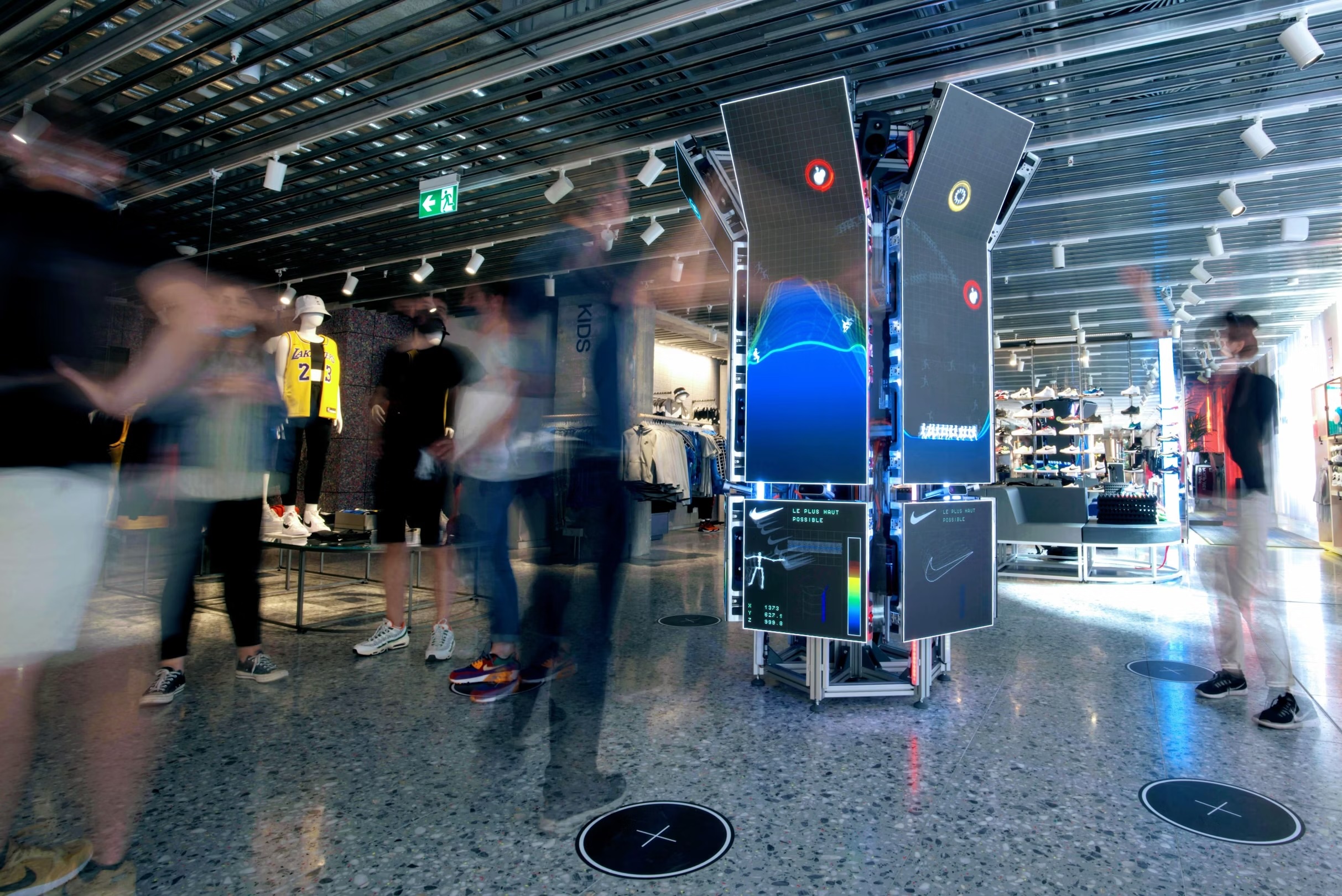
There was a lot of hardware to manage on this project. A body-control interface (using 6x Microsoft Azure Kinect devices) connected to a 360-degree "infinite scrolling" game on LED displays. There were 6 Windows PCs (for tracking) and 1 Ubuntu Linux PC (for graphics output, lighting control and sound). A custom LED light show embedded in the fixture echoed events happening on screen.
The "Kinect Game" concept was not exactly new by the time we built this installation (2020), but this was a well-executed concept, delivered in an unusual screen format. We also had to get to grips with Microsoft's latest iteration of its body control device, the Azure Kinect, which required a lot more on-host GPU processing than its more "standalone" predecessor.
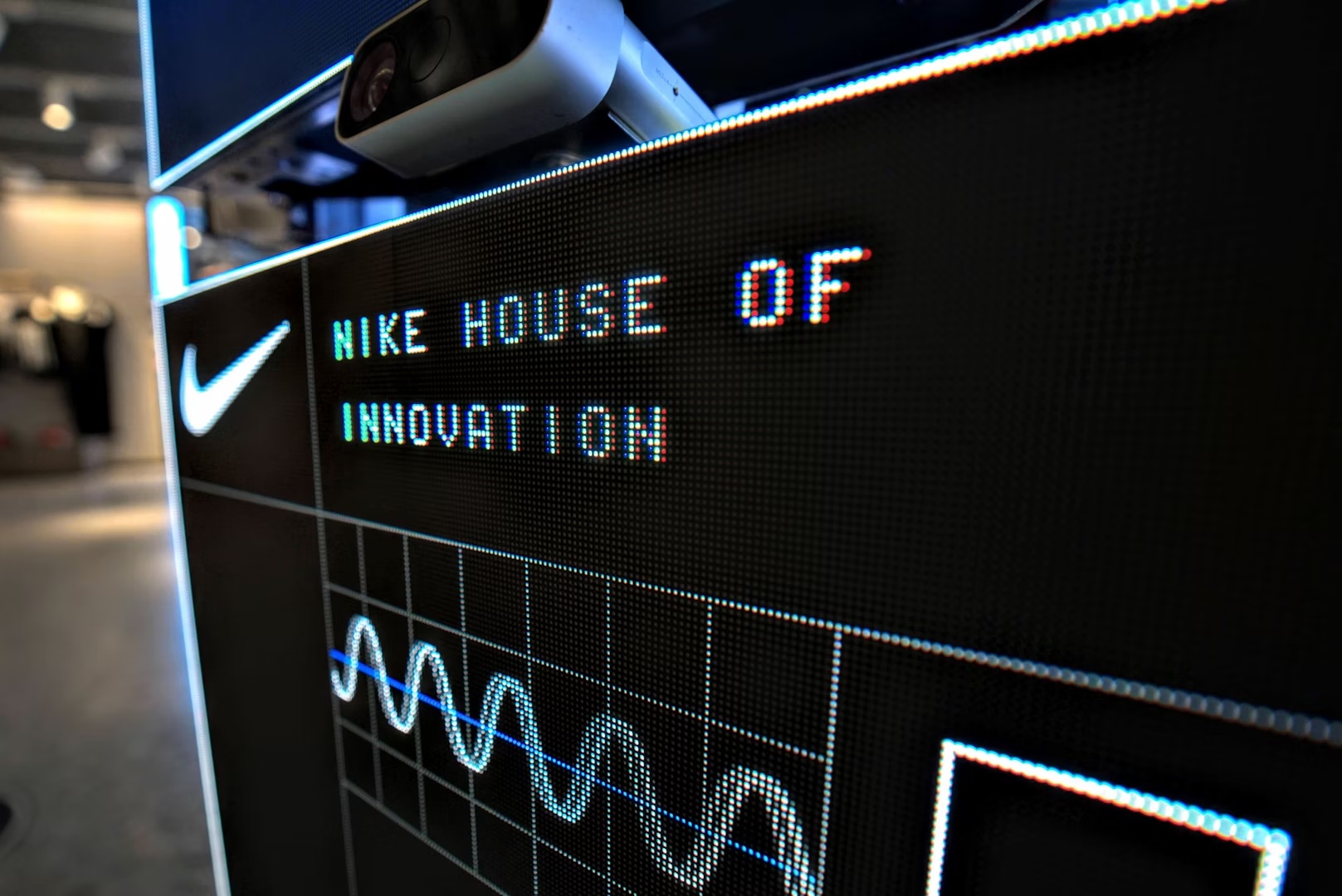
I enjoyed using my favourite GPU-accelerated library for 2D graphics in the browser - PixiJS - for this mini game. We made good use of spritesheets and custom shaders to get the appropriate retro-gaming aesthetic. I have since used this library for many other project - because often 2D is all you really need! - and lately it has begun to embrace WebGPU so the future looks good.
Since we wanted to localise sound to "where you were standing" in this 360-degree screen setup, I needed to output more than just two channels of audio. Since discrete output channels are a bit unwieldy in typical web audio libraries, I wrote my own (https://github.com/RandomStudio/multi-speaker-web) and this allowed me to do very basic surround sound panning which was ideal.
I also took all of the photographs you can see on this page and the official Case Study at https://random.studio/projects/nike-kids-pod (with the exception of the cover image there).